Loading & Unloading, Flex Feeding, and Inspection in a Single Cell
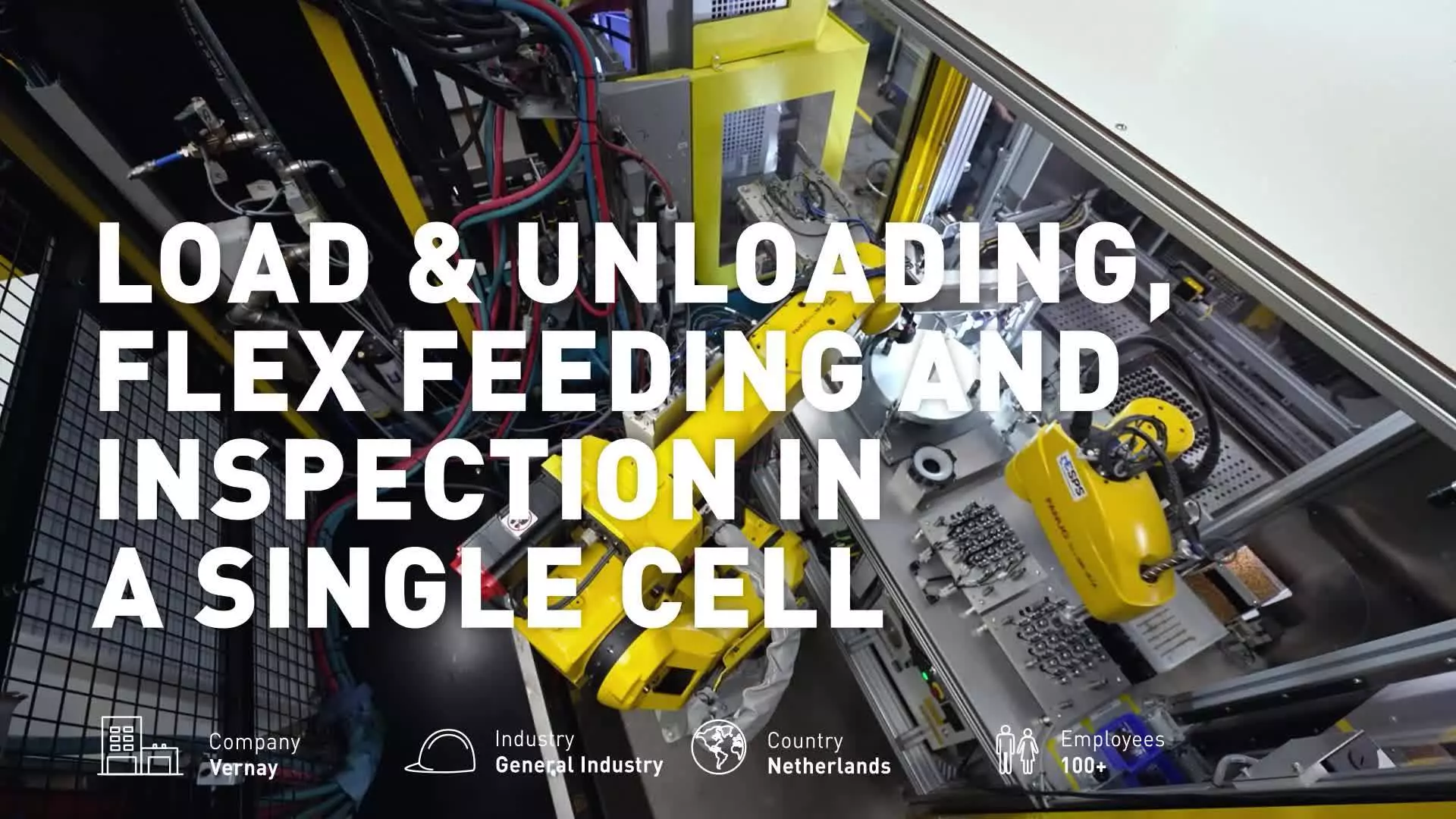
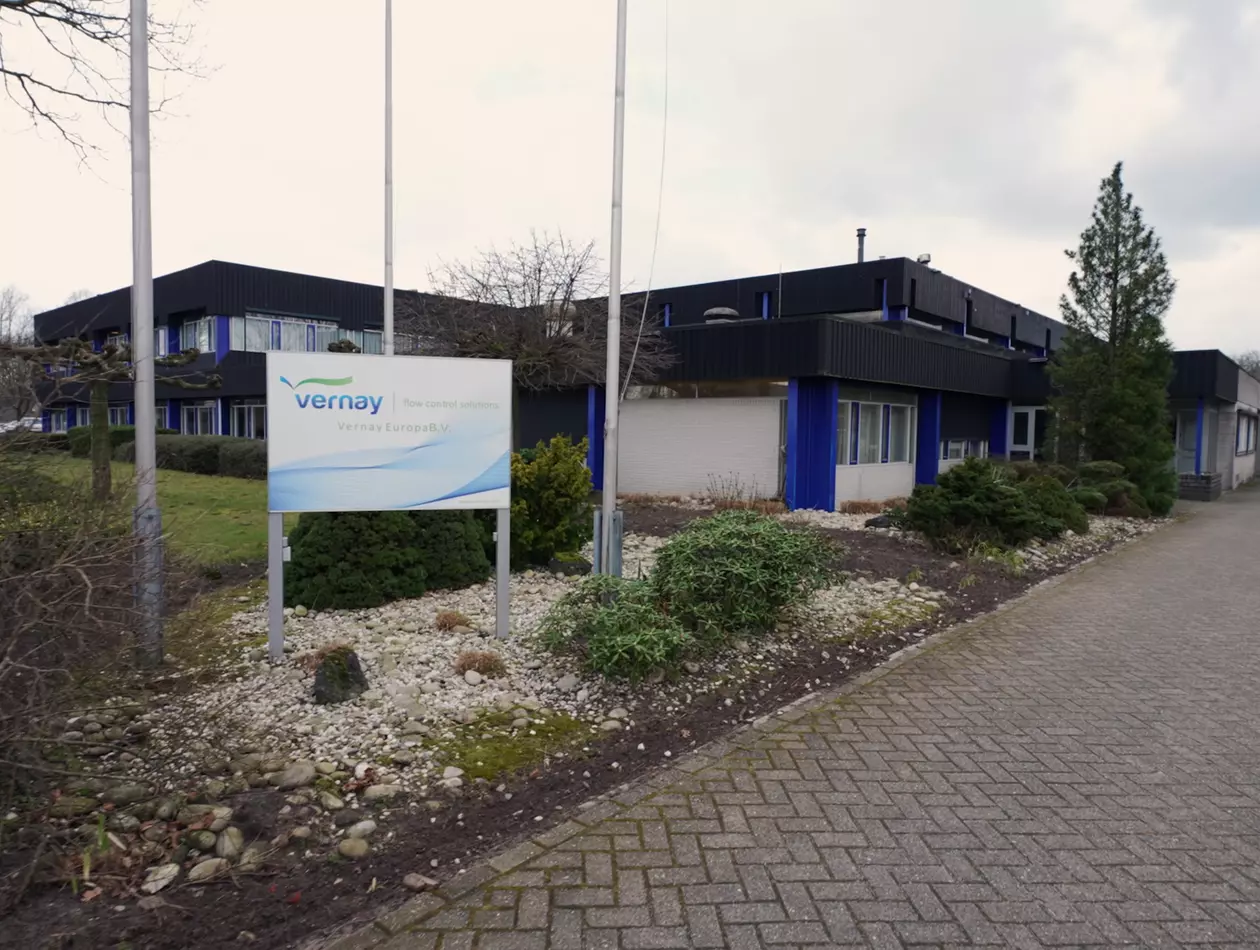
Vernay is globally renowned for flow control solutions, producing over a billion rubber valve components annually across Asia, the Americas, and Europe. Their critical products, used in devices like respirators and EV battery systems, must meet the highest quality standards with zero defects.
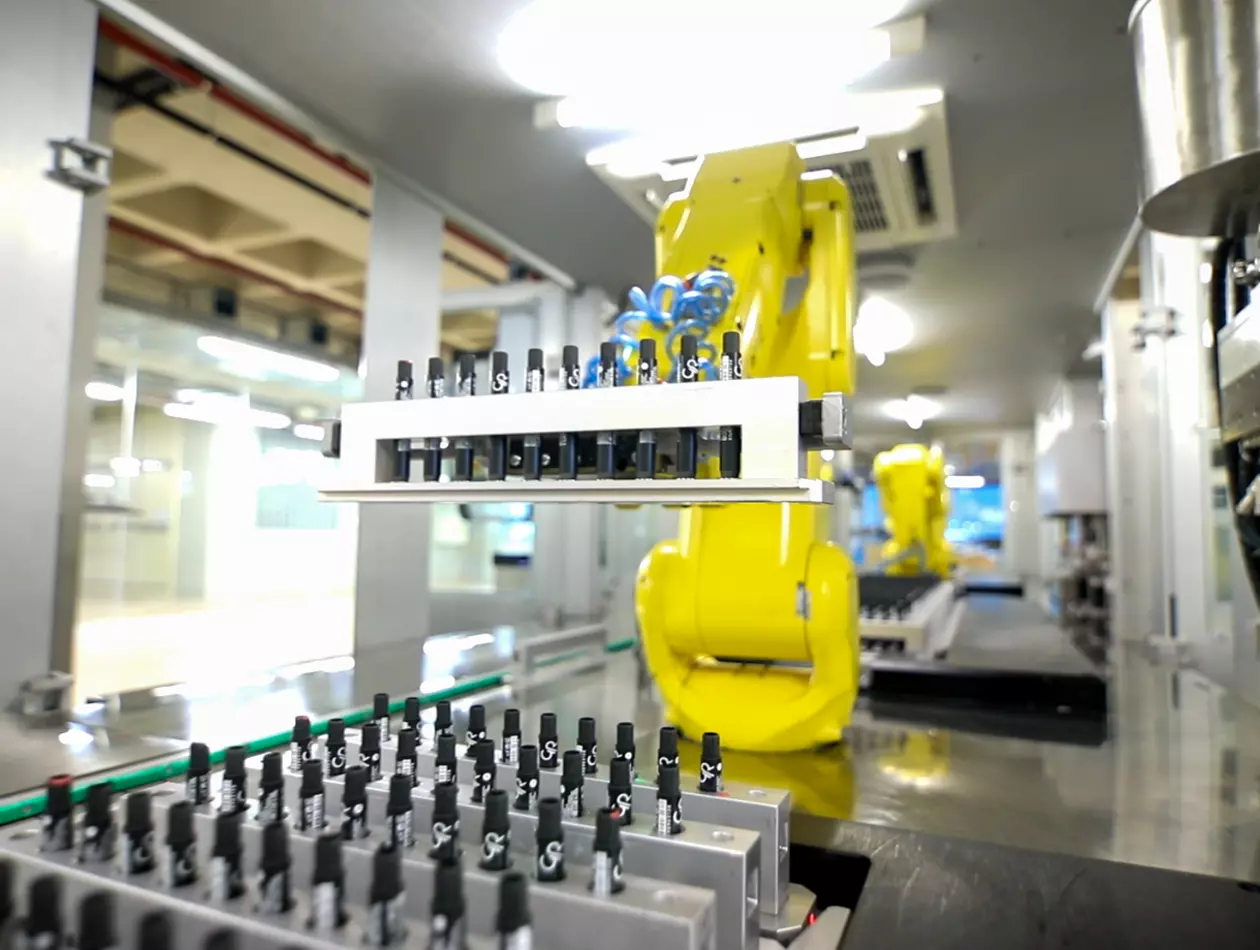
Parts are produced 24 hours a day without interruptions.
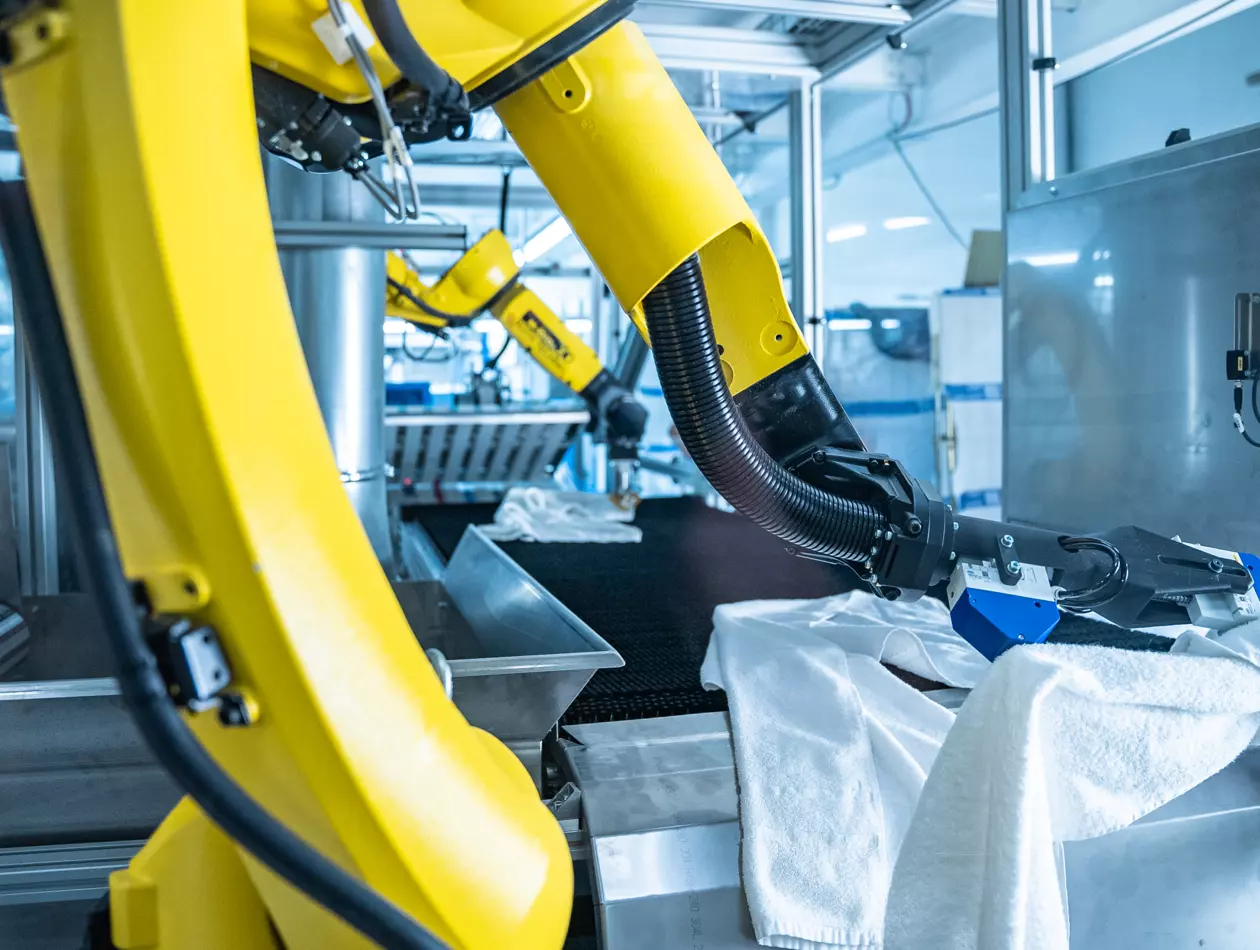
Global availability of FANUC products and parts.
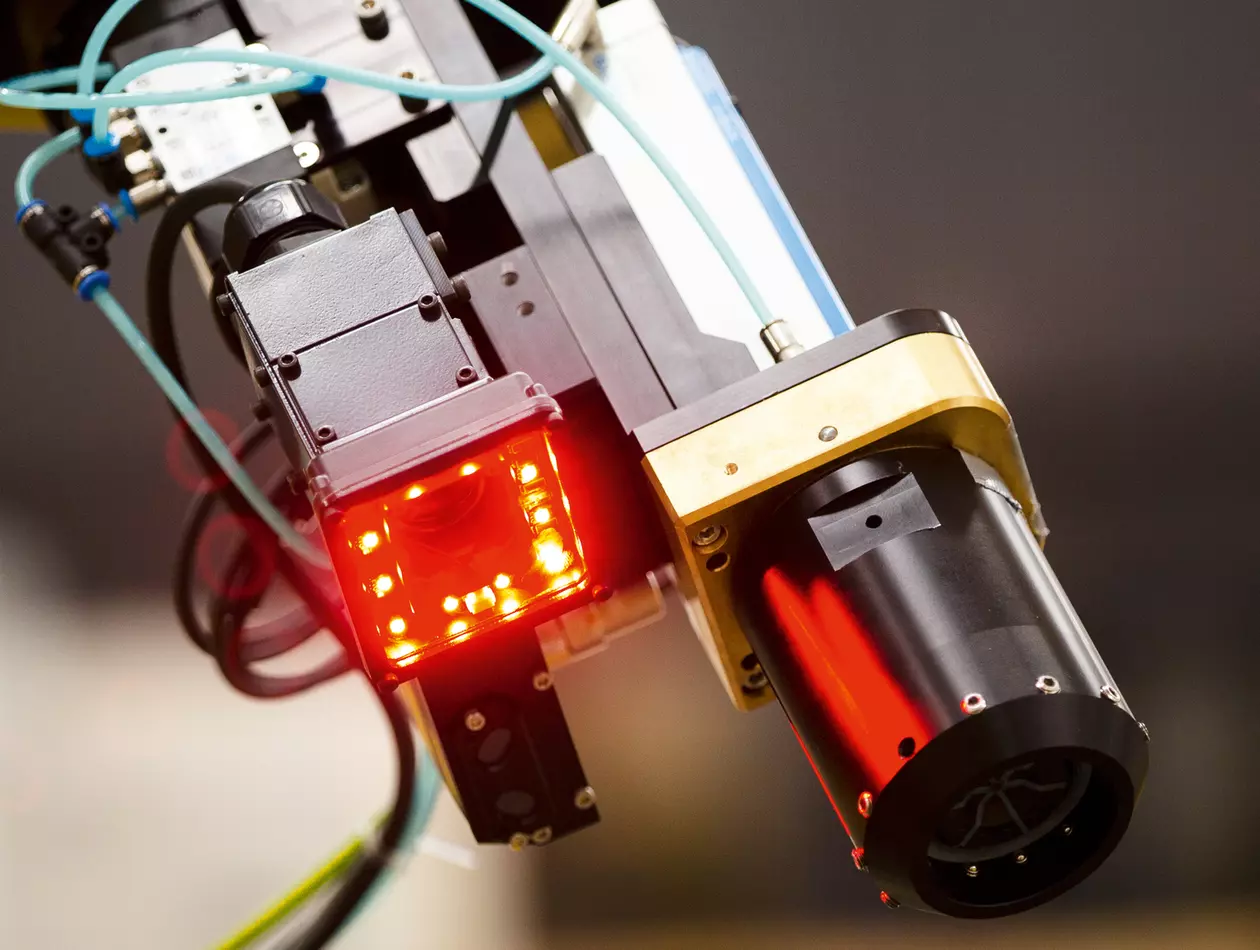
Quality control inspection with the SCARA robot.
Insights
Company
Story
Products
Insights
Key Insights from Task to Result
Task
Vernay was looking for a way to fully automate a production process involving flow-control solutions, used in many industries including domestic and medical devices, industrial applications and the automotive market. The available floor space was quite limited, so the solution needed to be compact.
Solution
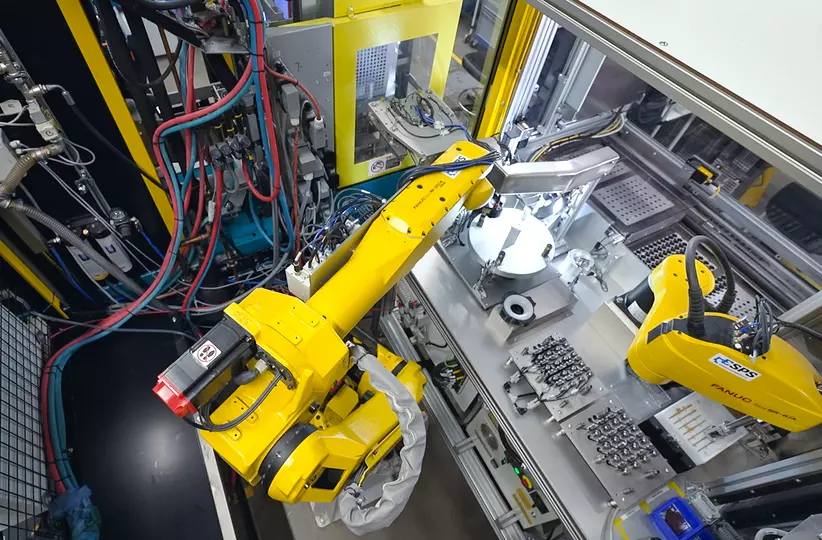
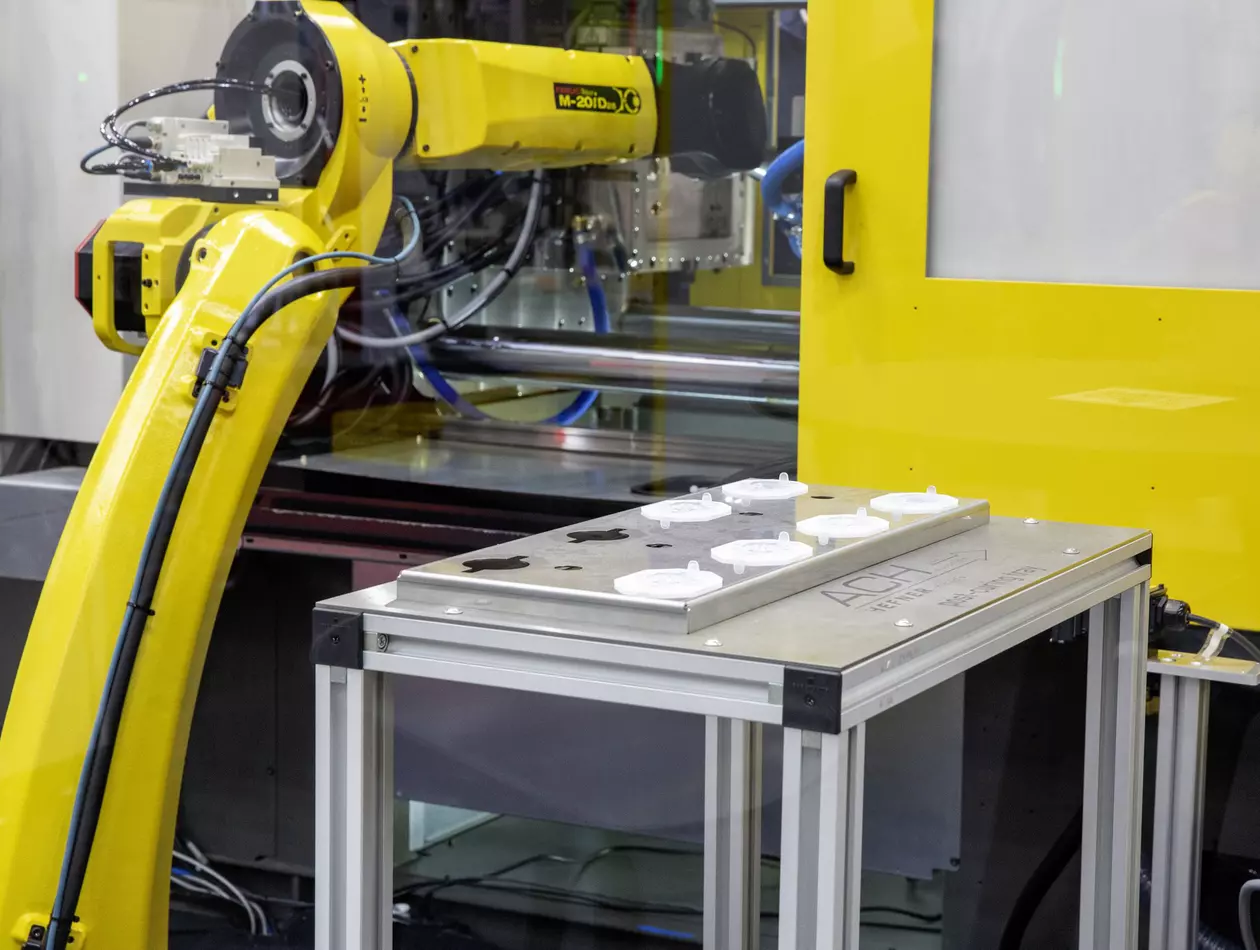
The solution provided by ESPS consisted of two FANUC robots in each of four work cells. A SCARA robot, the FANUC SR-6𝑖A, is used for picking, placing, and quality control, and the FANUC M-20 is employed to flexibly load and unload a moulding machine.
Result
The solution allowed Vernay to run this production process in a fully automated way. Consequently, the company can produce parts 24 hours per day without interruptions.
Company
About Vernay
With a 75 year history, Vernay has built a reputation worldwide as a flow control solutions specialist. Vernay produces more than one billion products per year, and has operations in Asia, the Americas, and Europe specialising in the development and manufacture of rubber valve components and assembled valves. Their products are used in domestic and medical devices, industrial applications and the automotive market. Because their products are components used in other devices, the company's name is often not immediately visible. Yet their products are critical to the functioning of respirators, EV battery ventilation systems, brake systems, inkjet printers and coffee machines and therefore must meet the highest quality standards, with zero defect tolerance.
ESPS designed a solution for Vernay that employs the six-axes M-20 robot arm to load moulds into and unload finished parts from a moulding machine. Depending on the End-of-Arm-Tooling (EoAT) the robots can handle a variety of different parts and operations.
In a typical example of the production process, the M-20 picks up a tray of metal inserts and loads it into the moulding machine. Once the moulding operation has completed its cycle, the M-20 removes the tray of finished parts from the machine and places it onto a workbench. The SCARA robot (the FANUC SR-6𝑖A) removes each finished moulded piece from the tray one at a time and holds it in position for a quality control check using computer vision. When the computer QC inspection is satisfactory, the SCARA robot places the moulded part onto a tray for conveyance further down the line for packaging.
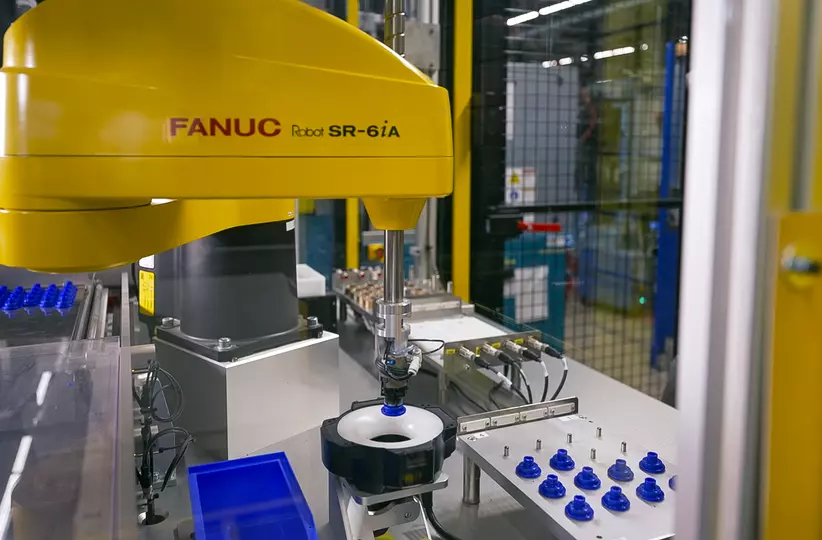
In addition to the quality control inspection, the SCARA robot is also used to pre-position metal inserts onto a tray which the M-20 then loads into the moulding machine.
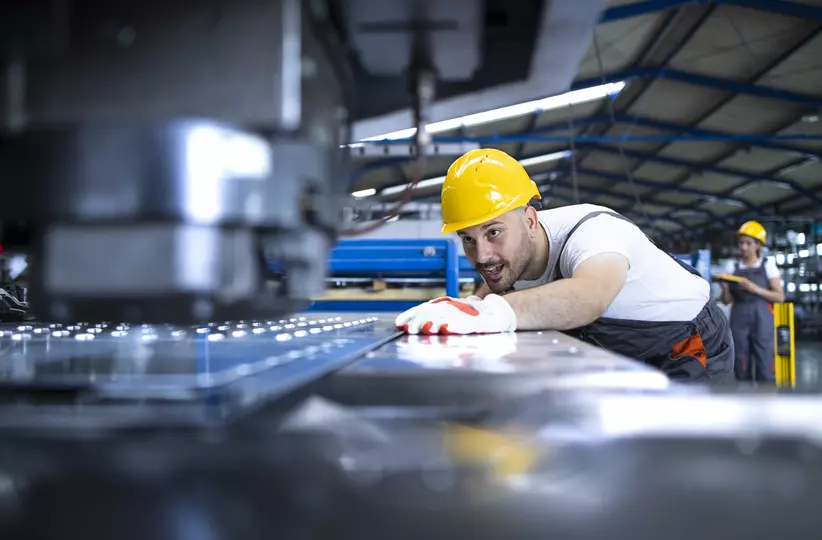
The system is flexible enough to allow for random quality checks by a human operator who can choose a tray for further manual inspection and measurement.

André Voc
Automation Engineer at Vernay
Vos described the solution in the following way. "The automation covers the entire process from feeding-in insert and assembly parts, taking out pressed products, and cleaning moulds, to the specific depositing of checked and approved parts. For all handling applications, FANUC robots are being used."
Vernay is pleased with the results, and Vos commented: "The full automation of these processes allows us to produce parts 24 hours a day without interruptions. Another advantage is the global availability of FANUC products and parts, enabling us to achieve interchangeability and standardisation. We are very satisfied with the functionality and have now deployed robots from FANUC in several production cells worldwide."
Products
Get Behind the Technology: Discover Related Products
Concentre-se na potência e no desempenho com a série M-20 da FANUC. O design objetivo melhora sem esforço a funcionalidade do robô. Com todos os utilitários perfeitamente contidos no braço, problemas como prender, rasgar e esfregar, são coisa do passado. Ideal para o manuseamento de vários materiais, o M-20 é uma excelente escolha para tarefas que envolvam cargas úteis médias.
O SR-6𝑖A é uma excelente escolha para aplicações de montagem, pick & place, inspeção e embalagem que exijam uma capacidade de carga útil de até 6 kg. Com um tamanho reduzido, a SR-6 oferece velocidade e precisão dentro de um campo de ação de 360°. O design de pé ultraleve e os serviços integrados minimizam o risco de interferências com dispositivos periféricos. É uma solução altamente eficiente para ambientes sensíveis em termos de espaço, oferecendo um desempenho preciso e fiável em aplicações de manipulação de materiais.
Explore our comprehensive range of factory automation solutions, showcased in detailed case studies, and designed to optimise and streamline any manufacturing process.
Automatize a carga/descarga de máquinas com robôs para melhorar significativamente a sua produção, proporcionando uma precisão superior e um funcionamento contínuo, ao contrário do controlo manual. Aumente a eficiência, obtenha uma produção consistente, reduza os custos de mão de obra e acrescente um valor substancial a todo o seu processo de produção.
A tecnologia de inspeção visual melhora os seus processos de fabrico com sistemas automatizados baseados em imagem que inspeccionam e analisam objectos com precisão. As soluções avançadas de inspeção visual utilizam câmaras, sensores e software de ponta para captar e processar imagens, detetar defeitos, medir dimensões e garantir que os seus produtos cumprem os mais elevados padrões de qualidade.
Automatize a manipulação de materiais com robôs industriais para obter inúmeras vantagens para a sua empresa. Aumente significativamente a eficiência e a produtividade, reduzindo o tempo e o esforço necessários para o manuseamento manual. Permita que os robôs funcionem continuamente sem fadiga para garantir um desempenho consistente e minimizar os erros, conduzindo a um maior rendimento e a tempos de processamento mais rápidos.