


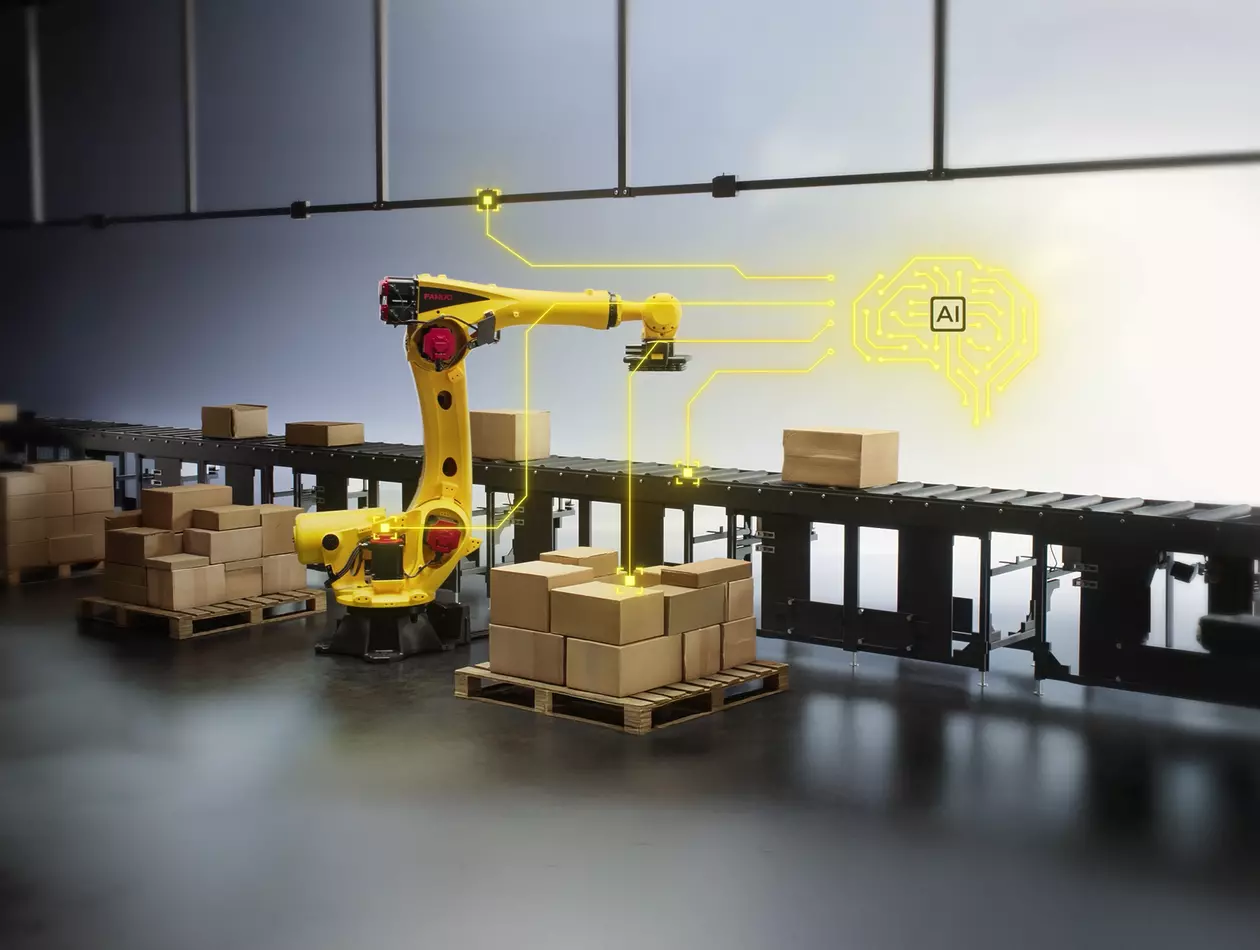
Physical AI for Industrial Robotics and Automation
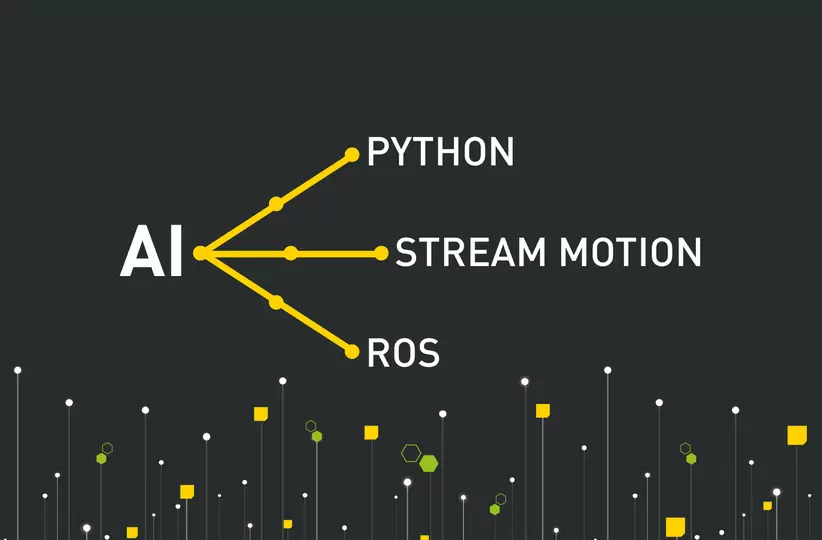
Building the Foundation for Physical AI
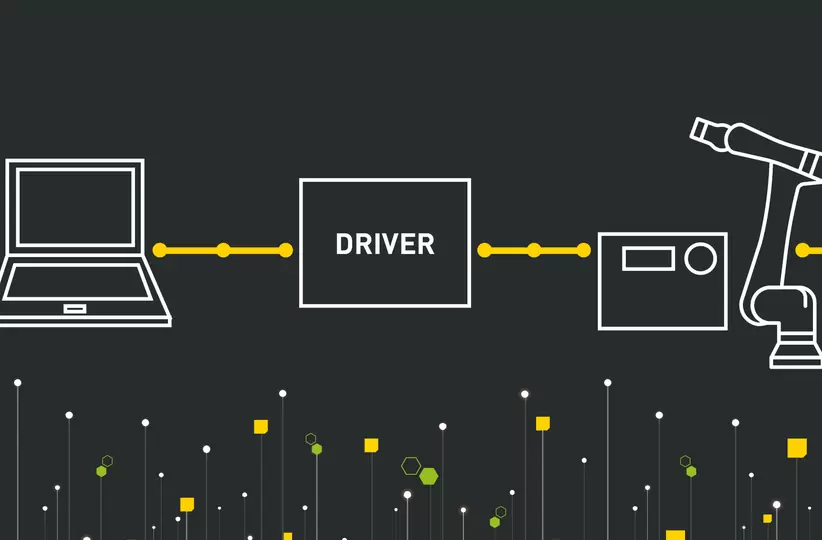
FANUC ROS 2 Driver

Python Programming
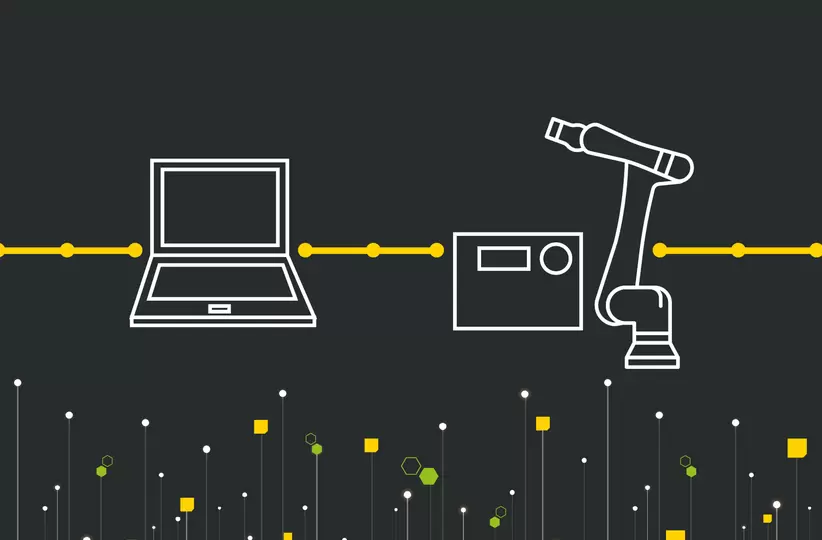
Stream Motion Implementation
How FANUC is Furthering Physical AI Through Strategic Partnerships
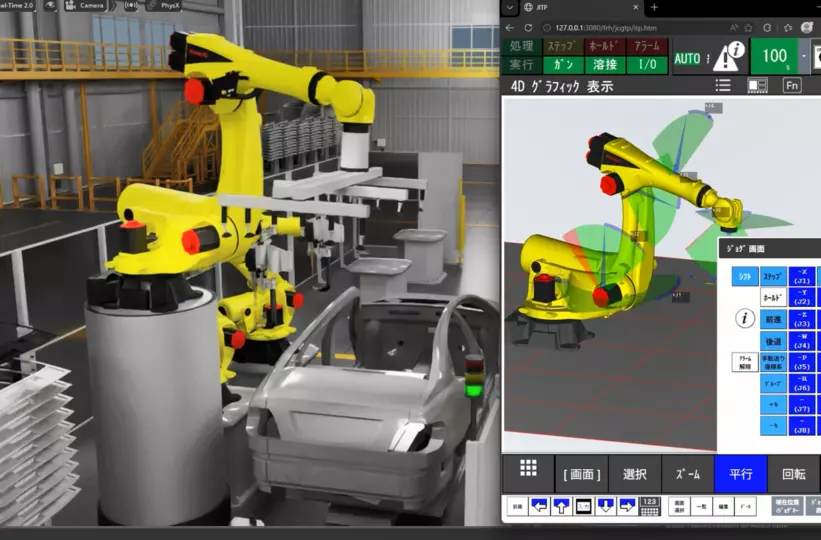
Advancing Physical AI and Digital Twins Through Collaboration with NVIDIA
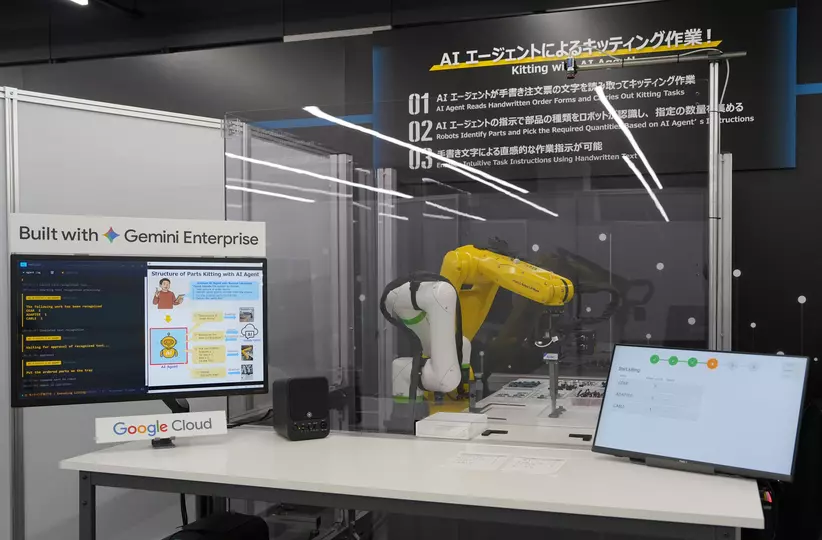
FANUC Further Realises Physical AI Through Open Platform Initiatives with Google
Get Started with the FANUC ROS 2 Driver
The FANUC ROS 2 driver is available now for the CRX Collaborative Robot Series and several other models.
Developers can access documentation, installation guides, and support via FANUC CORPORATION’s official GitHub repositories.

Why Open Platforms Matter
One of the greatest advantages of an open platform is the flexibility to use computing resources from both cloud data centers and edge servers, all connected via next-generation high-speed communication. This means manufacturers can scale automation, optimise performance, and adapt quickly to changing production needs.
Benefits of Physical AI for Industrial Automation
More Flexible Programming
Faster Development
Improved Accuracy
Safer Collaboration
Shorter Commissioning
Greater Scalability
Physical AI Applications
Physical AI enables robots to perceive, adapt, and act in real-world manufacturing environments. These applications highlight how FANUC robots can use AI, real-time control, natural language instructions, and simulation to perform complex automation tasks with greater flexibility and precision.
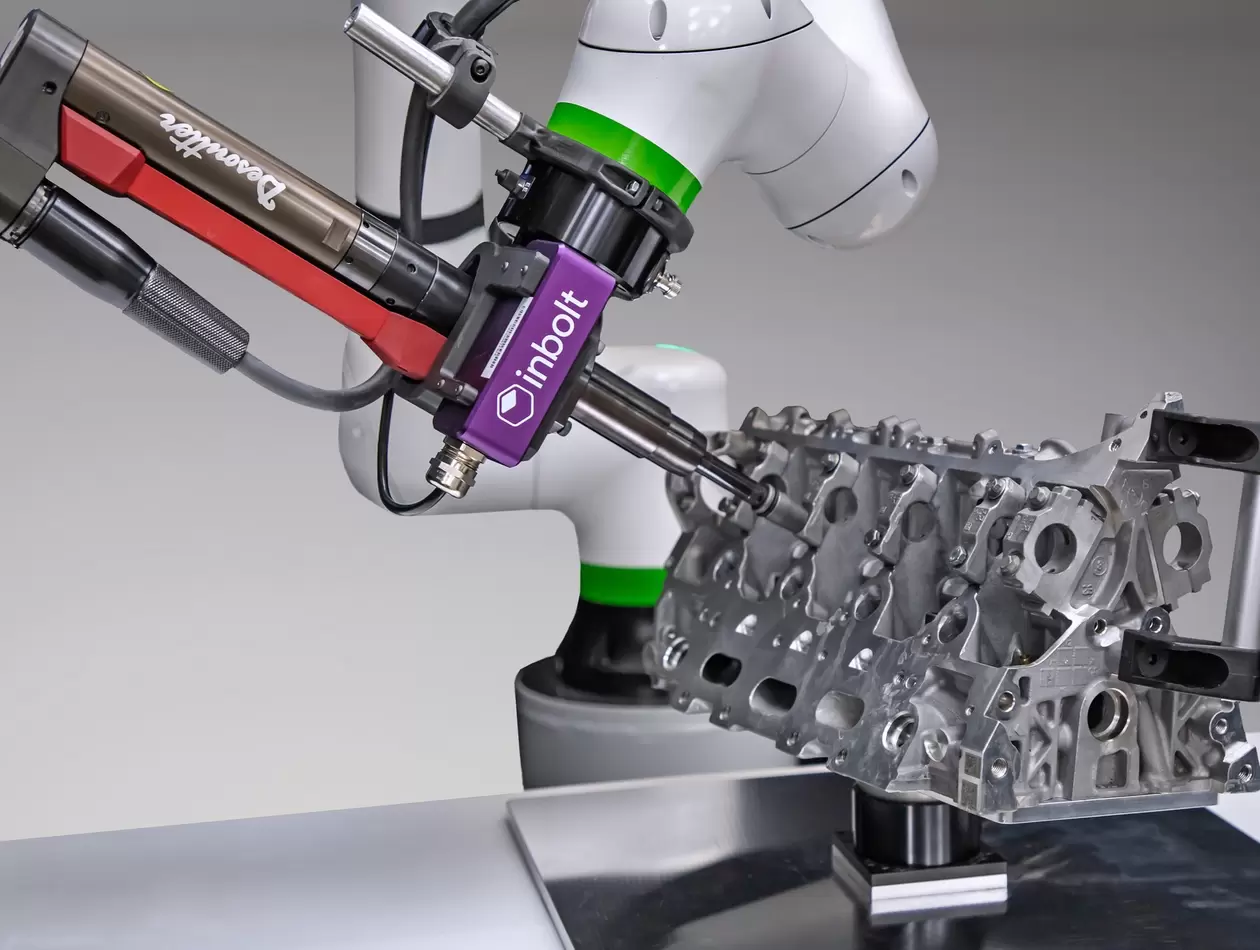
AI Robot Tracks Moving Parts and Tightens Screws
FANUC robots can identify and track workpieces moving in three dimensions, following them precisely in real time. This enables operations such as tightening screws on moving parts, a task that traditionally required precise fixturing or part stabilisation. With 1 millisecond high‑speed tracking performance, high-speed 3D tracking ensures consistent accuracy even in dynamic environments.
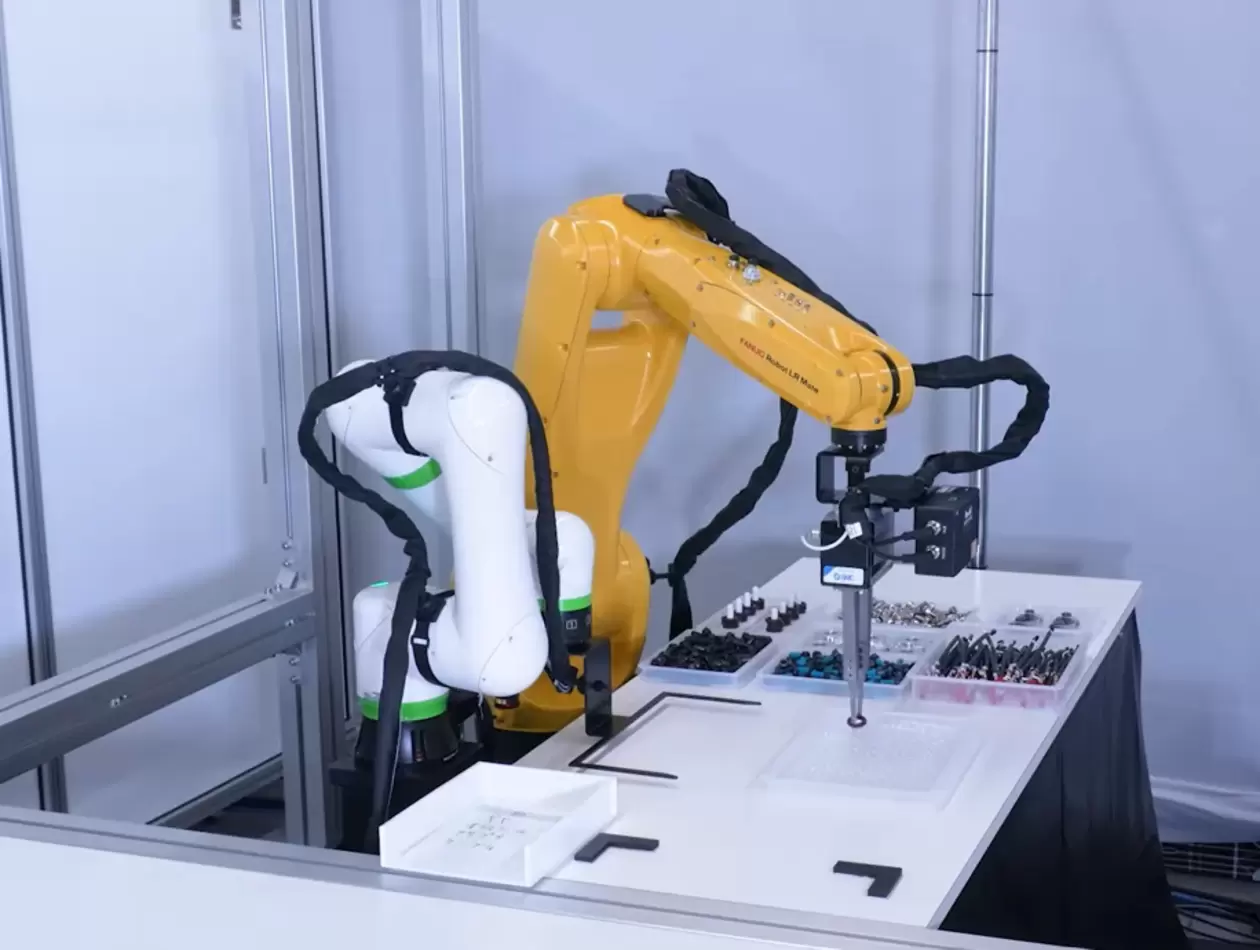
AI Agent-Driven Kitting Operations
By issuing instructions in natural language to the AI agent for tasks like photographing order forms, recognising text, and transporting trays and parts, a robot can execute the kitting of workpieces. By combining an AI agent, which understands natural language to control the robot and autonomously execute tasks, with a masterless AI recognition function that identifies objects based on natural language inputs, it becomes possible to modify operation logic, just as if instructing a human.
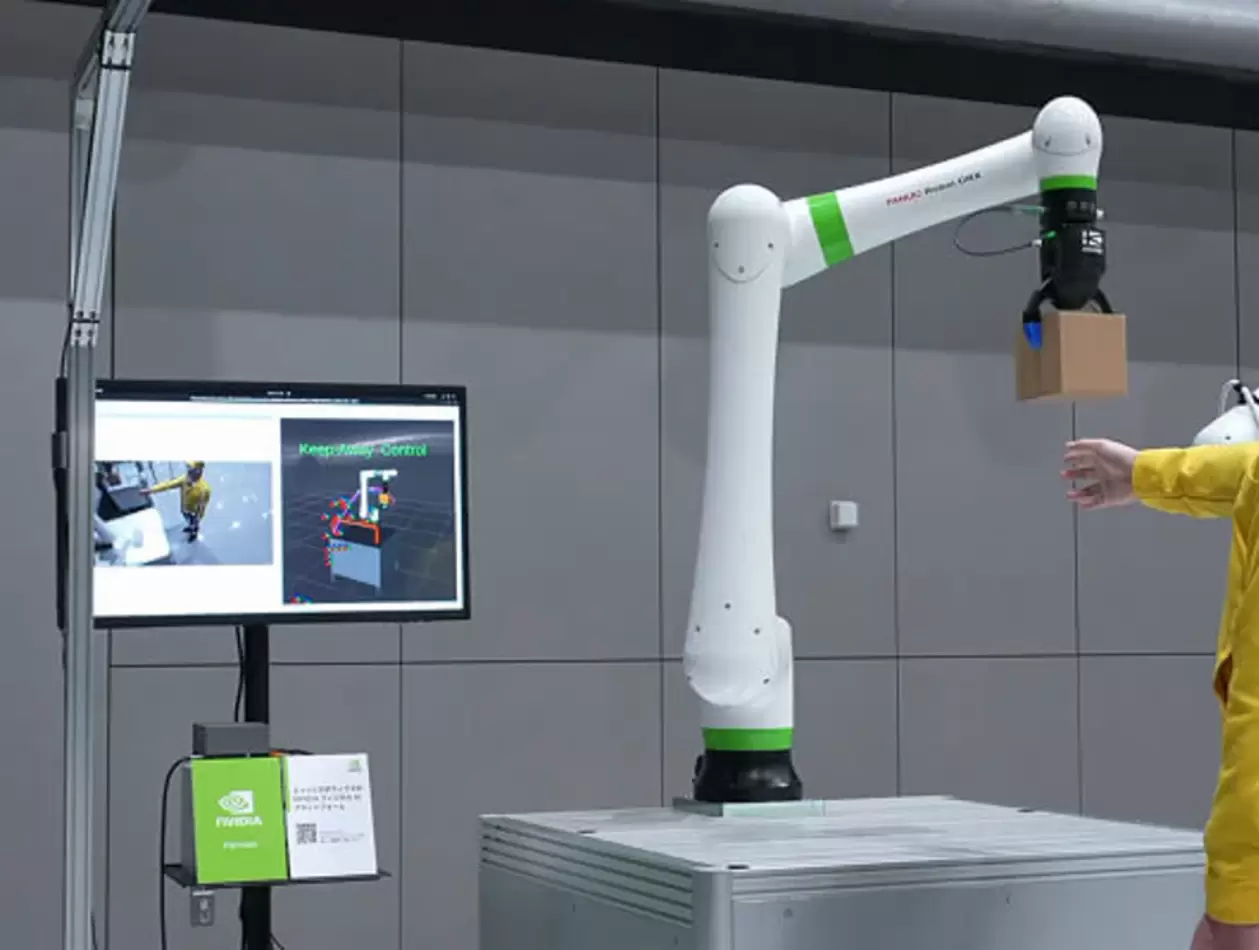
AI Robot with Dynamic Proximity Monitoring
FANUC robots equipped with AI-driven perception can detect nearby people and adjust their paths in real time without stopping production. Using the torque command input of the “Stream Motion” function, the force generated by the robot arm is limited within a safe operating range. If a human enters the robot’s working area, the robot automatically modifies its trajectory to avoid contact. Once the area is clear, the robot returns to its original path and continues the task. This enables safe, uninterrupted collaboration on the factory floor.
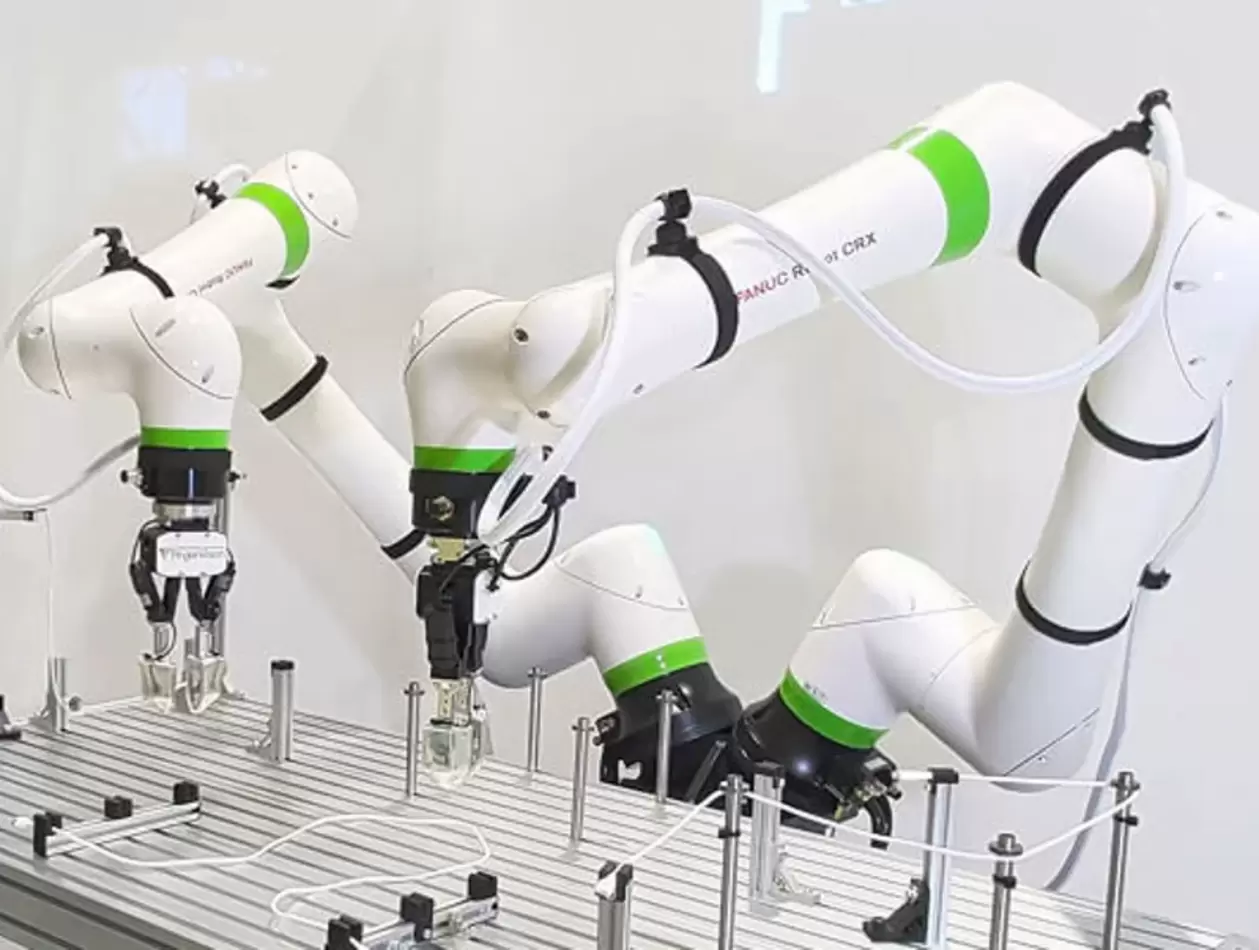
AI Controls Dual Arms to Install a Flexible Cable
Using Vision-Language-Action (VLA) foundation model, two FANUC robot arms can work together to imitate human tasks, like folding a t-shirt or performing highly dexterous wiring operations. The system detects cable tension in real time and manipulates soft, flexible cables with human-like sensitivity. Leveraging multi-axis articulation, the robots route cables across complex 3D paths, including height, depth, and tilt, while maintaining accurate handling and preventing damage.
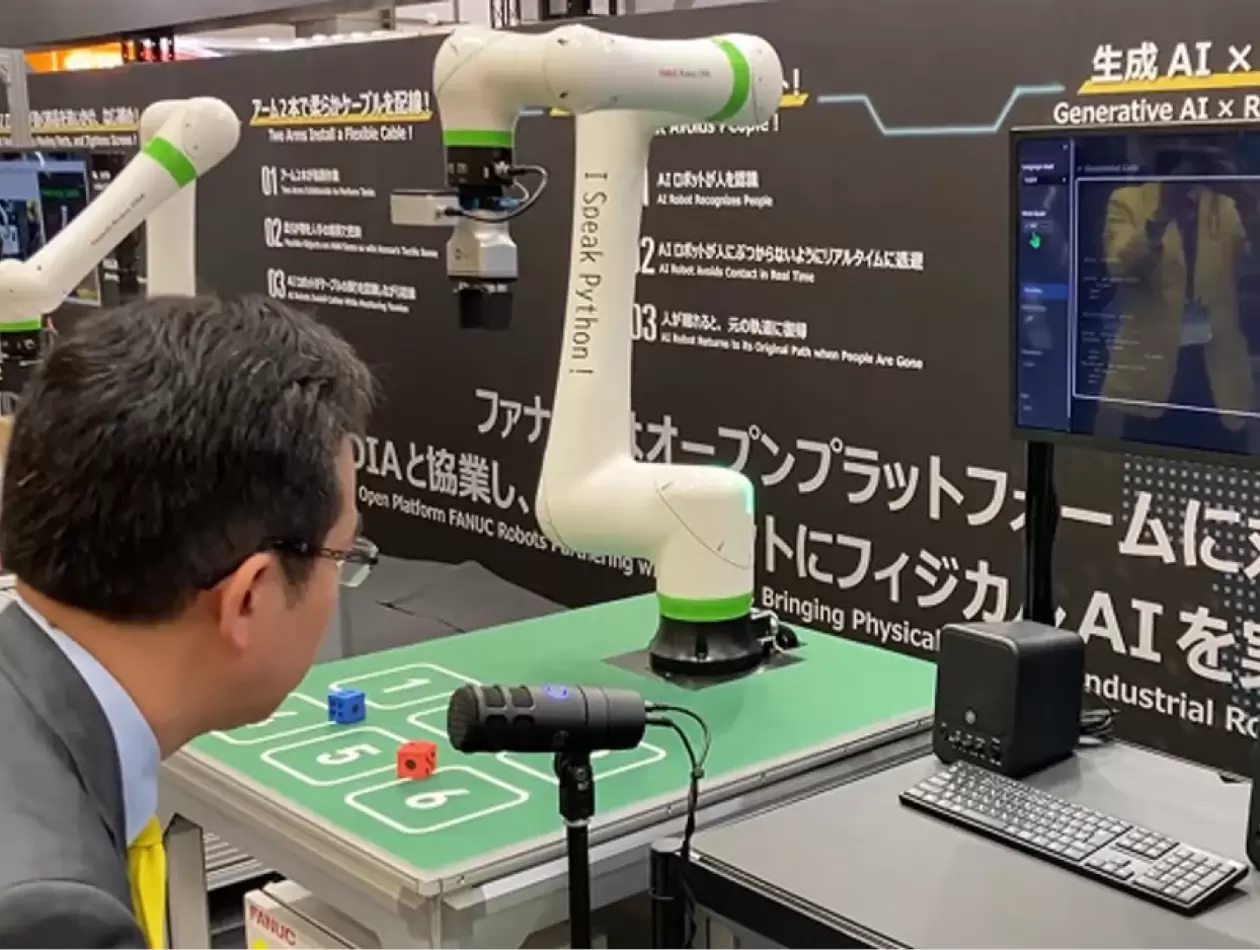
Robot Programming by Voice with Generative AI
FANUC robots can recognise voice commands in multiple languages, automatically generate Python programs using generative AI, and execute the resulting tasks while perceiving their surroundings. Users provide instructions verbally, and the robot interprets the language, generates the appropriate program and carries out the requested action.
These capabilities also support complex tasks such as:
Rolling a die and placing it in the correct location based on the number shownStacking a die of a specific color on top of another
These tasks previously required specialised programming but can now be executed through intuitive voice commands.
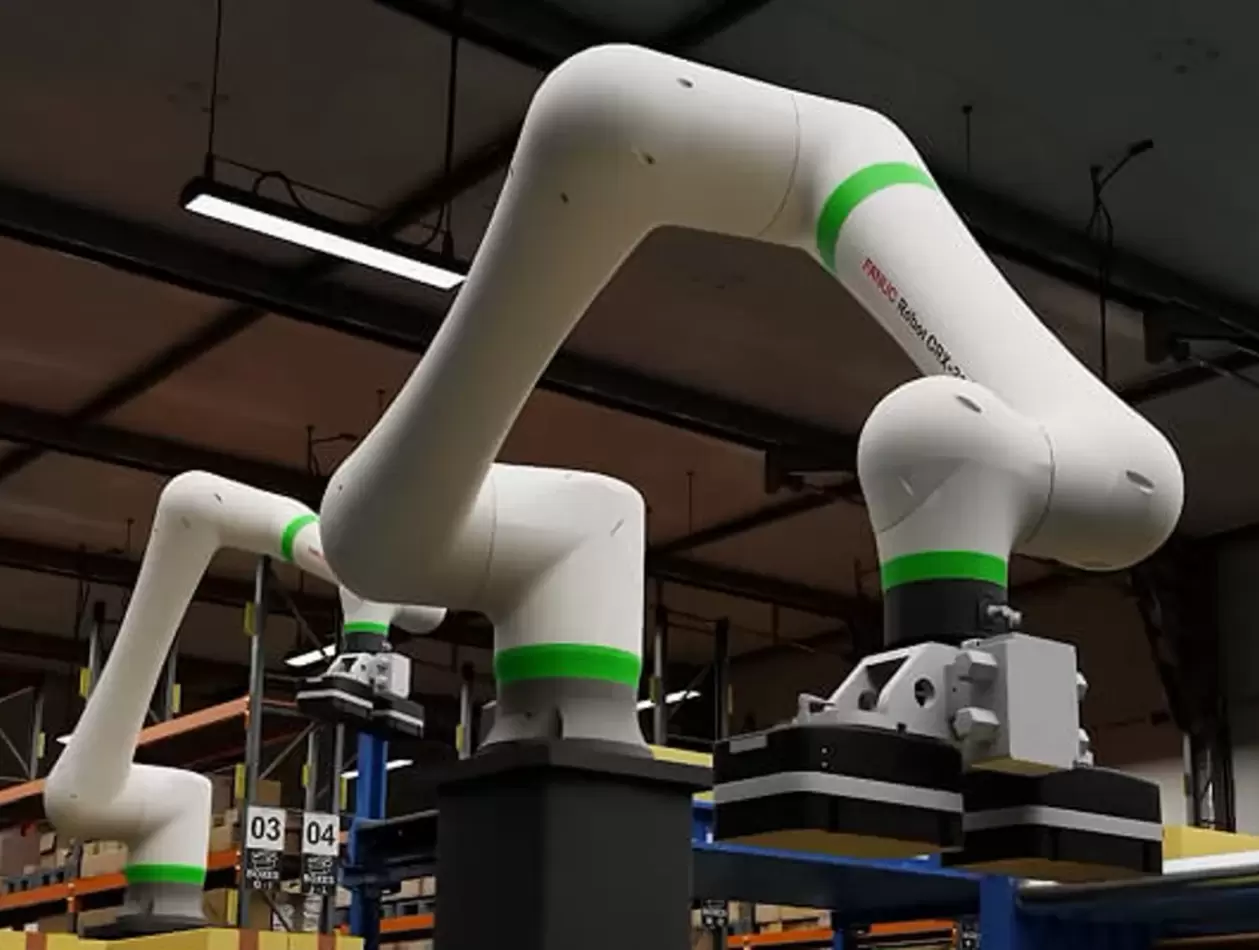
Advanced Simulation and Digital‑Twin Support
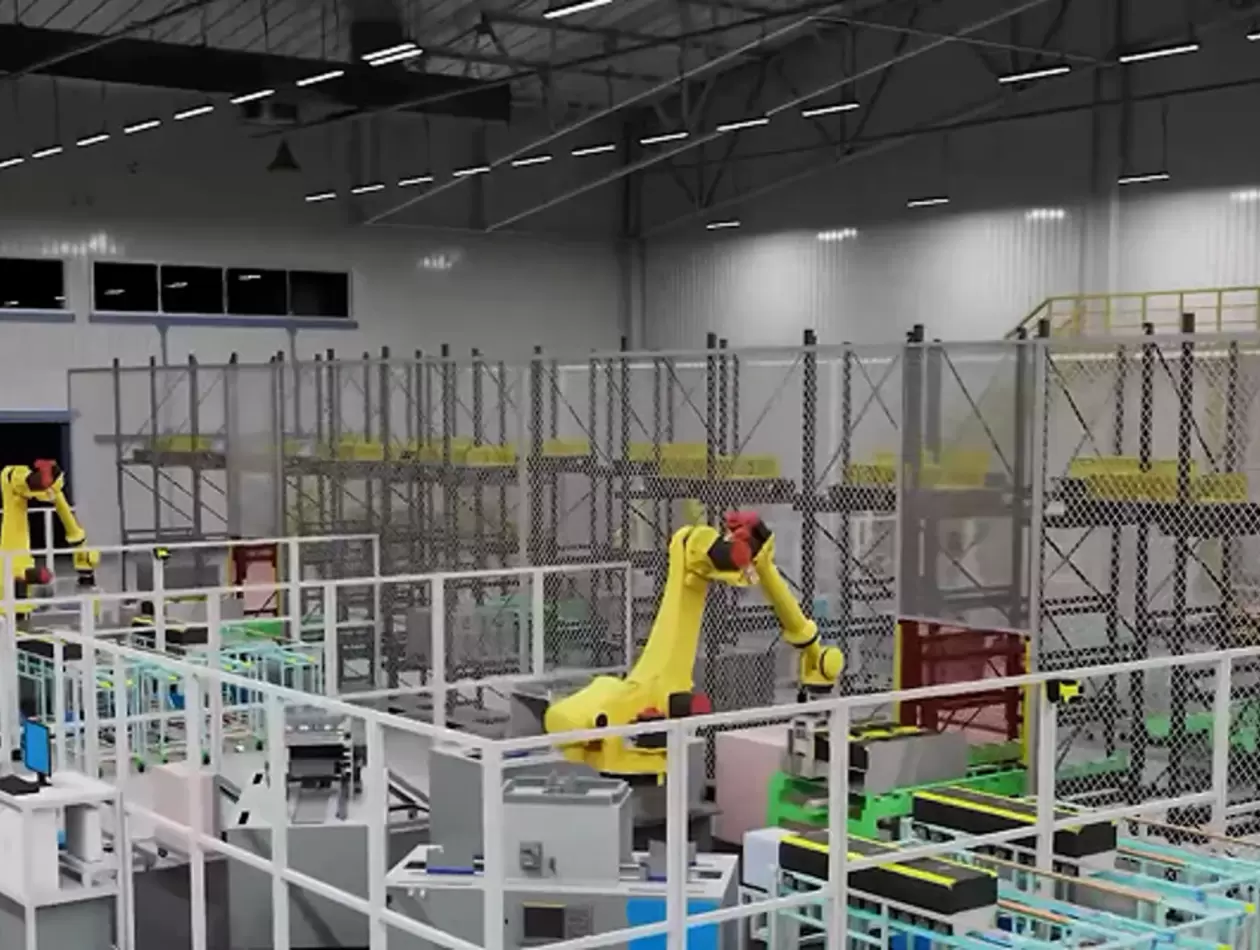
FANUC supports advanced simulation and digital‑twin technologies that allow manufacturers to design, test, and validate robotic systems before deployment. Photorealistic virtual factory environments help teams model robot behavior, evaluate cell layouts, and optimise performance in a risk‑free setting. By using NVIDIA Isaac GR00T to train the robot motion and object behavior, the robots autonomously learn to handle previously “unseen” situations. FANUC robots are available in formats suitable for modern simulation platforms, enabling cycle‑time analysis, trajectory validation, and AI training data generation in virtual production workflows. These tools shorten commissioning time and improve overall system accuracy.
Enhanced Integration with FANUC Simulation Tools
FANUC’s simulation ecosystem—such as its offline programming tools—supports the exchange of trajectory and performance data with external simulation environments. This allows developers to model real robot behavior with greater fidelity and validate system performance earlier in the design process.
*ROS is a trademark of the Open Source Robotics Foundation.
**Python is a registered trademark of the Python Software Foundation.
***GitHub is a registered trademark of GitHub, Inc.